In an era of climate change and resource constraints, agriculture faces a grand challenge: grow more food with less environmental impact. The good news is that a wave of sustainable farming technologies is rising to meet this challenge. From precision irrigation systems that save water to AI algorithms that optimize fertilizer use, data-driven innovation is reshaping farming into a greener, smarter enterprise. This blog post explores how cutting-edge agri-tech is making farming more sustainable and why data is the driving force behind this transformation. We’ll also look at how Elevatoz Agritech’s mission and solutions align with these trends – leveraging technology and data to create a more sustainable agricultural ecosystem.
Precision Agriculture: Doing More with Less
One of the most powerful concepts in sustainable farming is precision agriculture – using technology to tailor farming practices with almost surgical accuracy. The principle is simple: give crops exactly what they need, no more and no less. By avoiding excess, we save resources and reduce negative impacts. Key precision techniques and their sustainability benefits include:
- Variable Rate Technology (VRT): Using GPS-guided equipment and soil sensors, farmers can vary the amount of fertilizer or pesticide applied across different parts of a field, instead of a uniform blanket application. Healthier or nutrient-rich zones get less, weaker spots get a bit more – optimizing overall use. This efficient input management cuts waste and runoff, protecting water bodies from pollution. Studies show that where precision farming is widely adopted, fertilizer and water use can drop by 20–40% with no loss in yields. Imagine the global impact if every farm used 20% less chemical input – our rivers and soils would be much healthier.
- Precision Irrigation & Water Management: Water is life, especially on a farm. Traditional irrigation can be very wasteful, overwatering some areas and underwatering others. Modern irrigation systems use moisture sensors and even satellite data to assess exactly where water is needed and how much. Drip irrigation, micro-sprinklers, and IoT-controlled pivots ensure every drop counts. This is crucial as groundwater levels fall and droughts intensify. Early adopters of precision irrigation have achieved around a 5% reduction in water use already, and widespread adoption could yield an additional 20% savings in water consumption. That’s water saved for rivers, ecosystems, and future generations.
- Drones and Targeted Spraying: Instead of spraying entire fields with pesticides, smart drones or advanced sprayers can target only the areas that need it – for example, the specific row where a pest outbreak is detected. This dramatically lowers chemical usage. In fact, emerging AI-guided “see-and-spray” systems can identify individual weeds and shoot them with pinpoint herbicide droplets, rather than blanketing the whole field. Such ultra-precision spraying has shown up to 95% reduction in pesticide volumes needed (in experimental trials) without sacrificing crop health. Less chemical on fields means less harm to beneficial insects, soil microbes, and less residue on our food.
- Renewable Energy on Farms: More farms are harnessing renewable energy as part of their sustainability tech stack. Solar-powered irrigation pumps, for instance, replace diesel pumps – cutting carbon emissions and costs. Some high-tech greenhouses use solar panels not just for electricity but also to intelligently control light and temperature for plants. Wind turbines on farmlands generate clean power and provide extra income to farmers. By integrating renewables, farms are reducing their fossil fuel footprint. For example, precision tech like auto-guided tractors and fleet analytics also contribute – farmers using these have achieved ~6% reduction in fuel use by eliminating inefficient passes and idling. Fewer fuel emissions means cleaner air and a cooler planet.
Data-Driven Decisions for Sustainable Outcomes
What truly ties these technologies together is data. Sustainable farming today is as much a data problem as it is an agronomy problem. The more we understand the complex variables on a farm – weather, soil, crop genetics, market trends – the smarter (and greener) our decisions can be. Here’s how data-driven agriculture is making a tangible impact:
- Real-Time Monitoring and Early Alerts: On a modern farm, a network of sensors continuously feeds data on soil moisture, nutrient levels, crop growth stages, and pest traps. Farmers (or automated systems) monitor dashboards that update in real time. If a section of the field gets too dry, the system triggers irrigation only for that section. If an uptick in pest counts is sensed, a targeted treatment is scheduled before it becomes an infestation. By catching issues early and responding precisely, data prevents problems from ballooning – saving crops and reducing the need for heavy-handed interventions later. It’s like preventative healthcare for plants.
- Big Data and AI Predictions: Farms now accumulate gigabytes of data each season. Advanced analytics can compare this against years of historical data and even regional datasets (like weather patterns or disease outbreaks). The result? Predictive insights that help farmers plan ahead. For instance, AI models might predict a higher risk of drought stress in a certain month, prompting a farmer to adjust planting dates or choose a more drought-tolerant crop variety. Or machine learning might analyze satellite imagery to forecast yield, allowing better planning of storage and transportation (and avoiding spoilage). These data-driven strategies make farming more resilient to climate variability, which is key to sustainability.
- Precision Conservation: Data isn’t just about maximizing yield; it’s also guiding conservation efforts. By mapping a field’s productivity variations, farmers might identify a marginal area that consistently produces poorly. Rather than force it with extra fertilizer (which mostly leaches away), a sustainable choice might be to convert that spot into a conservation strip – planting native grasses to support pollinators or creating a buffer by a stream. Yield maps and profit maps help pinpoint where inputs truly pay off and where they harm more than help. This targeted approach means high-production zones get top management, while fragile zones get protective measures – achieving a balance between productivity and environmental care.
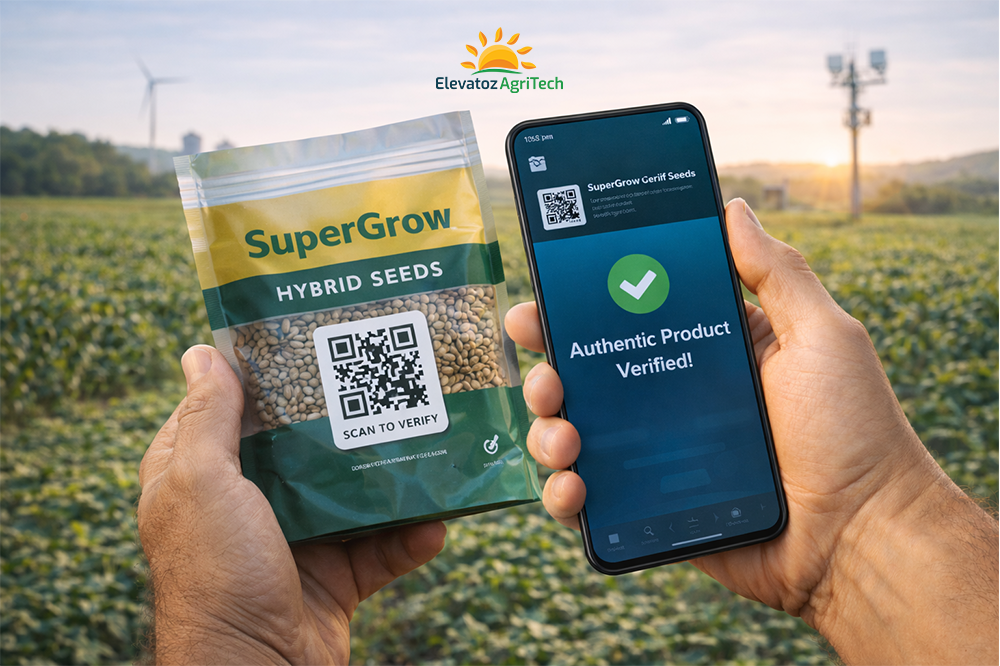
- Supply Chain Transparency: Data-driven agriculture doesn’t stop at the farm’s edge. Increasingly, the journey of food from farm to fork is being tracked for sustainability and quality. Technologies like blockchain and digital QR codes allow each product to carry its history digitally – where it was grown, how it was grown, when it was harvested, and how it traveled. This transparency is a powerful driver of sustainability: consumers can choose produce that meets certain standards (organic, fair trade, low-carbon footprint, etc.), and producers get rewarded for sustainable practices. Moreover, traceability data helps quickly pinpoint sources of any quality issues (like contamination), reducing food waste by limiting recalls only to affected batches. Elevatoz Agritech specializes in this kind of traceability, assigning every agricultural input a unique digital ID. By ensuring authenticity and tracking usage, we not only protect farmers from fake products, we also lay the groundwork for a more transparent and accountable food system that values sustainability at each step.
Elevatoz Agritech: Bridging Innovation and Sustainability
At Elevatoz, our core mission is to engineer trust and transparency across the agriculture value chain – goals that align naturally with sustainability. We believe that when farmers, agribusinesses, and consumers are connected by reliable information, smarter decisions follow. Here are ways Elevatoz’s innovations contribute to sustainable, data-driven agriculture:
- Combatting Counterfeits, Preserving Soil Health: Counterfeit seeds and fertilizers aren’t just an economic nuisance – they often cause environmental damage. Fake or substandard inputs can lead to crop failures, prompting farmers to reapply chemicals or re-plow fields, which wastes resources and degrades the land. Elevatoz tackles this issue head-on with our anti-counterfeiting and authentication solutions. By using secure QR codes on product packaging, we empower farmers to verify their inputs on the spot. This ensures that only approved, quality inputs go into the soil, protecting soil health and preventing the cascade of waste that follows counterfeit use. Farmer trust in input quality also means they won’t over-apply “just in case” – a common practice that precision guidance helps avoid.
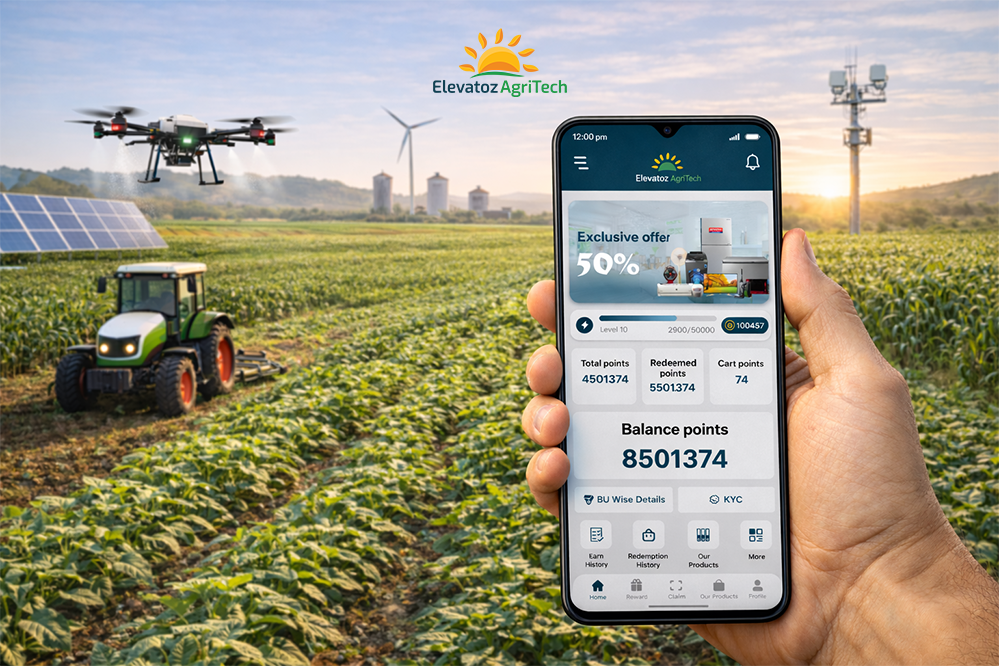
- Data-Driven Advisory and Training: Sustainability isn’t just about tools, it’s also about knowledge. Our Farmer Engagement platform closes the loop between brands and farmers by delivering localized advice and educational content whenever a farmer scans a product. For example, upon verifying a fertilizer, a farmer might automatically receive tips on optimum dosage and eco-friendly application methods for that specific crop and region. By guiding farmers on proper use (and even providing reminders about safety and environmental precautions), we help prevent the overuse or misuse of agrochemicals. The platform’s gamified learning encourages adoption of sustainable practices – farmers can earn loyalty points or rewards for completing modules on topics like organic manure use, integrated pest management, or water-saving techniques. In short, Elevatoz leverages digital engagement to spread sustainability literacy at scale.
- Intelligent Supply Chain = Less Waste: A data-driven supply chain is a greener supply chain. Elevatoz’s analytics (powered by Zentram.ai™) give agribusinesses unprecedented visibility into demand patterns and product movement. Why does this matter for sustainability? Because when companies produce and distribute closer to actual demand, excess inventory and wastage drop significantly. For instance, if our system forecasts lower demand for a particular pesticide in one region (perhaps due to a forecasted mild pest season), the company can avoid over-manufacturing or over-shipping that product. This prevents the scenario of unused chemicals expiring on shelves (which then require disposal). On the flip side, accurate demand predictions ensure farmers get critical inputs in time, avoiding crop losses that often lead to emergency, resource-intensive interventions later. It’s a virtuous cycle: the right product, at the right place, at the right time – minimizing both waste and panic-driven overuse.
- Feedback Loops for Continuous Improvement: Sustainability is a journey of constant improvement. Elevatoz builds feedback loops between the field and those who make farming products or policies. Through our platform, insights from the ground (like farmer feedback, scan data, yield outcomes) flow upstream. Agritech companies can learn which practices are yielding better results and tailor their products accordingly – for example, formulating a fertilizer that suits the local soil thus reducing need for corrective additives. Policymakers can also benefit; aggregated, anonymized data can highlight areas where sustainable practices are lagging, helping target agricultural extension efforts. By facilitating these feedback loops, Elevatoz ensures that data is not siloed – it’s shared and used to drive industry-wide shifts towards sustainability. Essentially, we’re helping the entire ecosystem learn and adapt in real time, based on evidence.
A Greener Horizon for Agriculture
The impact of data-driven, sustainable farming is already visible. According to studies, farmers using a combination of precision technologies have managed to increase crop yields by a few percentage points while significantly cutting down on inputs like fuel and chemicals. On a global scale, these efficiencies add up to remarkable numbers – millions of gallons of water saved, millions of pounds of fertilizers and pesticides avoided. Beyond the numbers, there’s a less tangible but equally important outcome: a change in mindset. Farming with data encourages seeing the farm as an interconnected system where balance is key. It shifts the focus from brute-force maximization to optimization and resilience.
Sustainable farming technologies are enabling practices like conservation agriculture, regenerative farming, and climate-smart agriculture. For example, data from remote sensors might enable a farmer to adopt no-till practices confidently, knowing soil moisture is sufficient and pests are in check. Or satellite data might help identify where planting cover crops could prevent erosion after harvest. These are old practices given new life by better information.
Elevatoz Agritech is proud to be part of this green revolution. By ensuring transparency and trust in the agricultural supply chain, we address one piece of the sustainability puzzle – accountability. A transparent chain means companies are more accountable for the quality and environmental impact of their products, and farmers are more empowered with information. Our work in digitizing the agri-input ecosystem complements field-level innovations. It’s all connected: a sensor in the soil, a QR code on a seed bag, an AI predicting rain – together they form an intelligent network working to grow more with less.
In conclusion, data-driven agriculture is proving to be a true friend, not foe, of sustainability. It provides the tools and knowledge to make precise, effective decisions that benefit both the farm and the environment. The future of farming will feature drones and sensors, yes – but also healthier soils, cleaner water, and more resilient rural communities. Every byte of data and every new technology must ultimately serve the goal of producing food responsibly and abundantly.
For farmers, agribusinesses, and tech innovators, the message is clear: embracing these technologies is not just an option, it’s imperative. As we’ve seen, even small improvements – a few percent less fertilizer, a few percent more yield – can translate into huge gains when scaled globally. And often, those improvements come hand-in-hand.
At Elevatoz, we remain committed to driving this change. By uniting stakeholders through technology and information, we help agriculture not only elevate yields but also elevate its harmony with nature. Sustainable farming is the future – and that future is being built today, one data-driven decision at a time.