Agriculture depends on trust.
Farmers trust that the seeds they sow are genuine. Distributors trust that products move through the supply chain as intended. Brands trust that their reputation reaches the field intact. And consumers trust that the food on their plate is safe.
Yet across global agriculture, this trust is under constant threat largely due to counterfeit inputs and opaque supply chains.
As agribusiness becomes more complex, transparency is no longer optional. It’s essential.
The Growing Threat of Counterfeit Agricultural Inputs
Counterfeit seeds, fertilizers, and crop protection products have become a silent crisis.
These fake inputs often contain substandard or harmful ingredients, leading to:
-
Poor crop yields
-
Soil degradation
-
Increased chemical usage
-
Financial losses for farmers
-
Long-term damage to brand credibility
For farmers, a counterfeit product can mean an entire season lost. For companies, it means erosion of trust that takes years to rebuild.
Traditional methods like holograms and printed labels are no longer enough. Counterfeiters adapt quickly.
Agriculture needs smarter protection.
Why Traceability Is the Foundation of Trust
Traceability gives every product a digital life.
By assigning unique identities to agricultural inputs and tracking them from manufacturing to farm-level usage, brands gain full visibility across the supply chain.
With digital traceability, agribusinesses can:
-
Monitor product movement in real time
-
Detect diversion or leakage early
-
Validate distribution partners
-
Understand regional demand patterns
-
Improve inventory planning
More importantly, traceability creates accountability at every step.
When every product journey is recorded, transparency becomes the norm.
Authenticity at the Farmer Level: The Power of Verification
For farmers, authenticity starts with a simple question:
“Is this product genuine?”
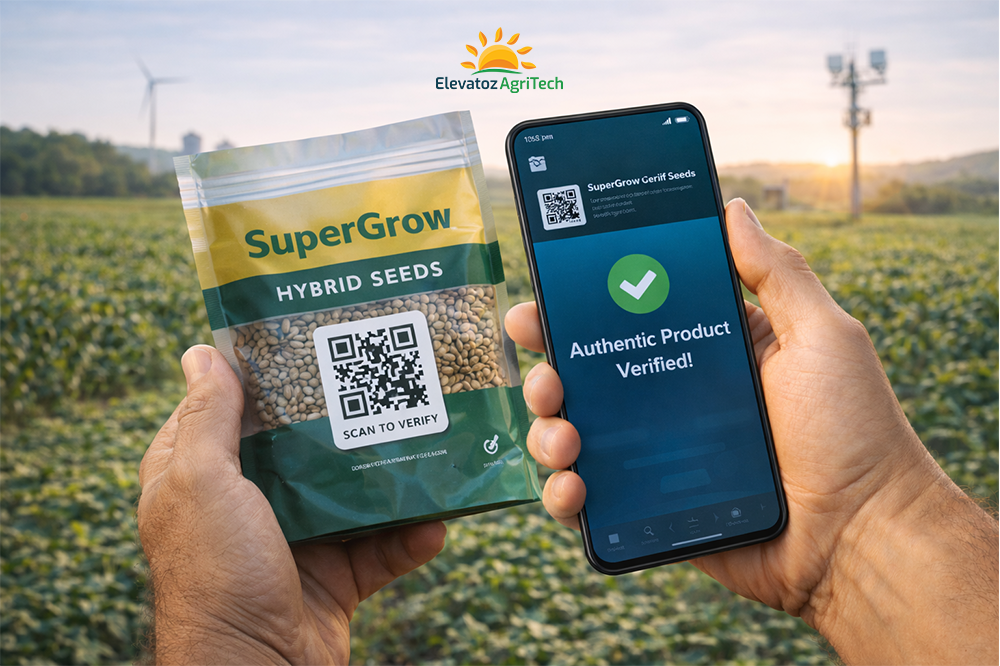
Digital verification tools such as secure QR codes empower farmers to instantly validate products using their smartphones.
A quick scan confirms:
-
Product legitimacy
-
Batch details
-
Manufacturing information
-
Usage guidance
This immediate assurance builds confidence while discouraging counterfeit circulation.
Each verification is more than a technical action — it’s a moment of trust between brand and farmer.
Turning Authentication into Engagement
Modern platforms go beyond verification.
Once a farmer scans a product, brands can deliver:
-
Crop-specific recommendations
-
Dosage instructions
-
Educational content
-
Safety guidelines
-
Seasonal alerts
Authentication becomes the entry point to a deeper digital relationship.
This transforms static packaging into interactive touchpoints — helping farmers make better decisions while giving brands valuable field-level insights.
Data Makes Traceability Actionable
Every scan, movement, and interaction generates data.
When analyzed intelligently, this data helps agribusinesses:
-
Forecast demand accurately
-
Reduce overproduction
-
Identify high-risk regions
-
Improve supply chain efficiency
-
Strengthen farmer outreach
Instead of reacting to problems, companies can anticipate them.
Data-driven traceability shifts agriculture from reactive to proactive.
Looking Ahead: Transparency Is the Future of Agriculture
The future of agribusiness will be shaped by visibility.
Brands that embrace traceability will outperform those that don’t. Farmers empowered with verification tools will make smarter choices. And ecosystems built on transparency will naturally become more sustainable.
Counterfeits thrive in darkness.
Traceability brings light.
As agriculture continues its digital transformation, authenticity and accountability will define success.
Because when every product is traceable and every farmer is empowered, trust becomes scalable.