Precision agriculture – the practice of using advanced technology to optimize crop production – is rapidly transforming how we farm. From GPS-guided tractors to AI-driven analytics, today’s farms are becoming smarter and more data-driven every season. In fact, the global precision agriculture market was valued at around $9.4 billion in 2022 and is projected to grow at over 12% annually through 2030. This surge is fueled by the need to boost yields sustainably while cutting costs. But what does the future hold for precision farming, and how is Elevatoz Agritech helping shape that future? Let’s explore the emerging trends and the innovative ways Elevatoz is driving precision agriculture forward.
Emerging Technologies Driving Precision Farming
Modern farms are high-tech hubs. A suite of core technologies is underpinning the next generation of precision agriculture:
- IoT Sensors & GPS Mapping: Tiny sensors in fields now monitor soil moisture, nutrient levels, and weather in real time. GPS technology guides tractors and seeders with sub-inch accuracy, ensuring “site-specific” farming where every inch of field gets exactly what it needs. This level of precision means less waste – water and fertilizers are applied only where required, reducing runoff and cost.
- Drones and Satellite Imaging: Eye in the sky? Absolutely. Drones equipped with cameras and multispectral sensors give farmers a bird’s-eye view of crop health. They can spot pest infestations or irrigation issues faster than any farmhand on foot. In the near future, autonomous drone fleets may regularly scan fields and even apply treatments on the spot. Such aerial crop monitoring is already redefining crop management, enabling targeted interventions and precision spraying that minimizes chemical use.
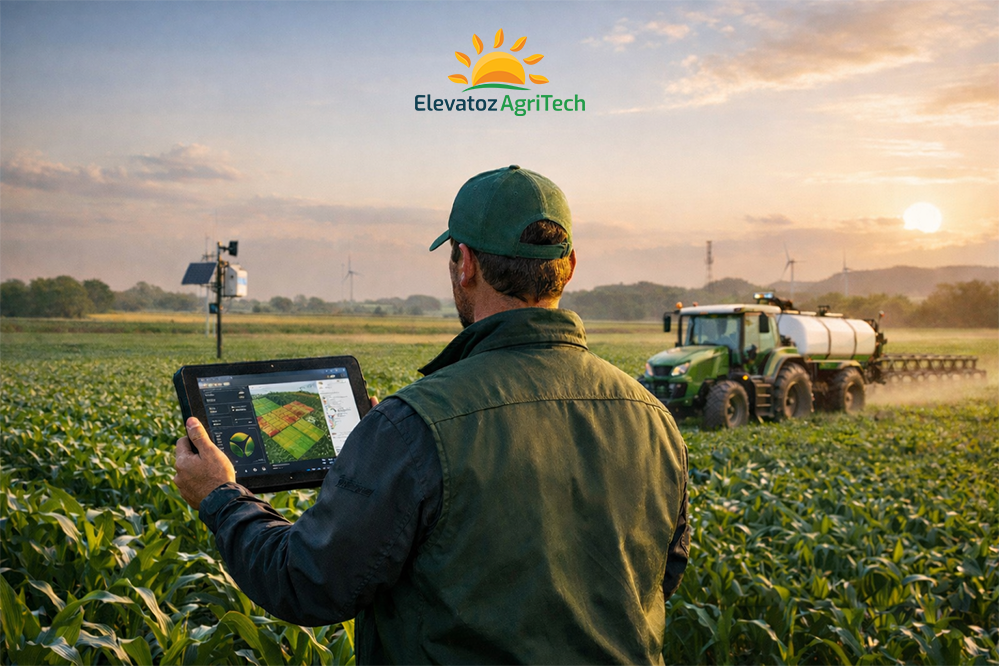
- Artificial Intelligence & Big Data: The real power of precision ag lies in making sense of all that data. This is where AI steps in. Advanced machine learning models can crunch weather forecasts, soil data, and historical yield patterns to predict problems before they happen. AI-driven decision support helps farmers know when to plant, how much to water, and where pests might strike next. As precision tools become more connected, the integration of AI and IoT is expected to deepen – think smart algorithms coordinating sensor data with automated farm equipment.
- Robotics and Automation: From self-driving tractors to robotic weeders, automation is reducing labor needs and human error. Future farms may see fleets of small, autonomous robots handling weeding, planting, and harvesting 24/7. These robots will work in tandem with AI “brains” and sensor “nerves,” executing precision plans with minimal supervision. The outcome? Higher efficiency and consistent results, even with labor shortages.
Making Precision Agriculture Accessible to All
One of the most exciting aspects about the future is making precision agriculture work for every farmer, not just large agribusinesses. Initially, many precision tools were expensive and complex – out of reach for smallholders. But that’s changing fast. Asia’s agritech boom has shown that precision farming can be scaled down and made affordable for small farms. For example, in countries like Vietnam and India, innovators have:
- Developed modular, adaptable tech: Low-cost drones, solar-powered IoT irrigation kits, and DIY soil sensors can be tailored to smaller plots. These scaled-down tools deliver many of the same benefits without the hefty price tag.
- Embraced mobile technology: Farmers increasingly use smartphones as precision ag tools. Simple apps and WhatsApp-based advisory services let them access satellite crop images or get weather alerts in local languages. A farmer with a basic smartphone can now tap into data-driven insights that improve decisions on planting and input use.
- Leveraged community and government support: In many regions, cooperatives and agri-tech startups (often with government backing) are helping share the cost and knowledge of precision farming. Training programs and subsidized equipment are bringing GPS guidance and data analytics to rural areas that were once left behind. As a result, adoption is rising beyond wealthy, large-scale farms – closing the technology gap.
The future of precision agriculture is inclusive. Expect to see more solutions designed with small and mid-sized farmers in mind – simple interfaces, vernacular languages, and flexible pricing models. When precision tech works for the smallest farm, everyone benefits, because a large portion of the world’s food is grown by smallholders. Elevatoz recognizes this, which is why our approaches emphasize accessibility and user-friendly design alongside cutting-edge tech.
Data: The New Soil of Agriculture
If soil was the foundation of old-school farming, data is the foundation of future farming. Every sensor reading, tractor pass, and QR code scan (more on that soon) generates valuable information. Harnessing this data will be key to feeding a growing population sustainably.
Data-driven decision making means farmers can move from reactive to proactive. Rather than applying fertilizer on a fixed schedule, they can apply it only when and where data shows a nutrient shortfall. Instead of guessing pest pressure, they can use AI predictions to spray before an outbreak gets severe. It’s farming based on evidence, not just experience.
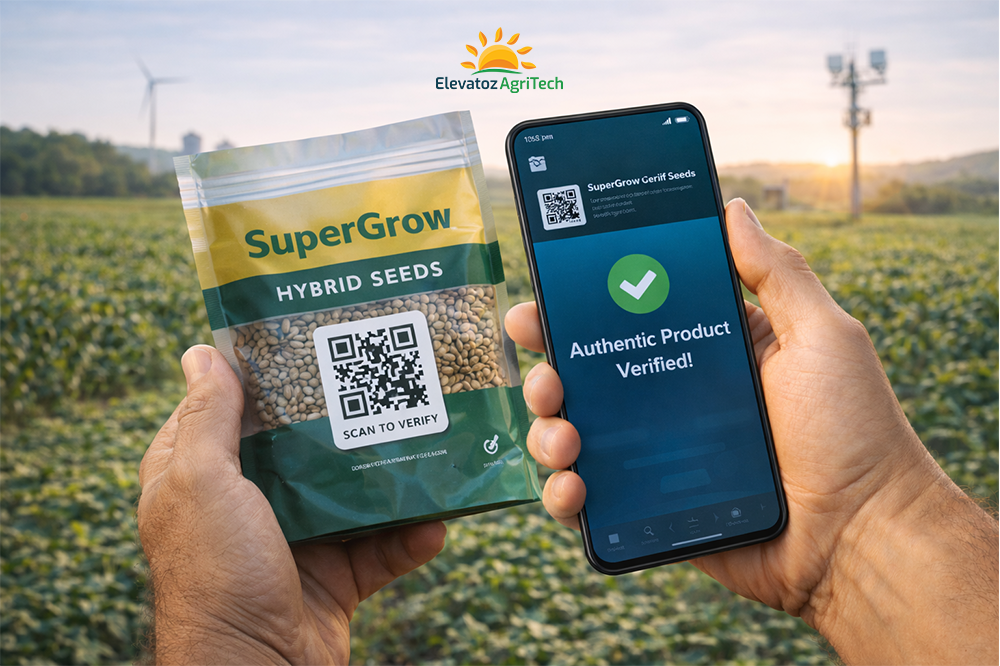
Crucially, data doesn’t just stay on the farm – it travels up the value chain. This is where Elevatoz Agritech is pioneering a unique approach: integrating on-farm and off-farm data for precision agriculture. By digitizing the agri-input value chain (seeds, fertilizers, etc.) through our platform, Elevatoz ensures that every bag of seed or fertilizer carries a “digital identity” via QR code. When a farmer scans a product at the time of use, it not only verifies authenticity, but also logs usage data and location. Over time, these countless scan points create a rich dataset showing which products are used where, when, and by whom.
Imagine combining that with farm sensor data – the possibilities are powerful. Companies can forecast demand for inputs more accurately (preventing shortages or gluts), and farmers can receive personalized advice (for example, “Field X needs 20% less fertilizer this season based on soil data and last year’s yields”). The future will see end-to-end data ecosystems where farm practices, input supply, and even market prices all talk to each other in real time. Elevatoz is already building that connected future today.
Elevatoz Agritech’s Innovative Approach to Precision Agriculture
So, how exactly is Elevatoz innovating in precision agriculture? Our philosophy is that true precision goes beyond the field – it spans the entire agriculture value chain, from factory to farm to consumer. Elevatoz focuses on the often-overlooked aspects of precision ag: quality, trust, and data connectivity.
- Traceability and Quality Assurance: It’s hard to be “precise” in farming if the inputs (seeds, fertilizers) are of poor or unknown quality. Counterfeit or subpar inputs lead to erratic results. Elevatoz tackles this with QR-code traceability on every product pack, ensuring that farmers can instantly verify they’re using genuine, high-quality inputs. This digital traceability system tracks each product from the source, building trust and providing precise data on product movement. The result? Farmers apply the right stuff, in the right amount, with confidence – a foundational step for precision outcomes.
- Precision in Distribution: We often think of drones and sensors in the field, but precision is just as valuable in the distribution network. Elevatoz’s Zentram.ai™ platform leverages AI to bring precision to agri-business operations. It analyzes sales patterns, geo-tagged distribution data, and even scan verifications to detect anomalies and forecast demand. For example, if a particular region shows rising scans for a new seed variety, the platform can signal distributors to stock more of that seed in nearby areas. This kind of data-driven supply alignment means inputs are available where needed, when needed – minimizing wastage and ensuring farmers have timely access to critical supplies.
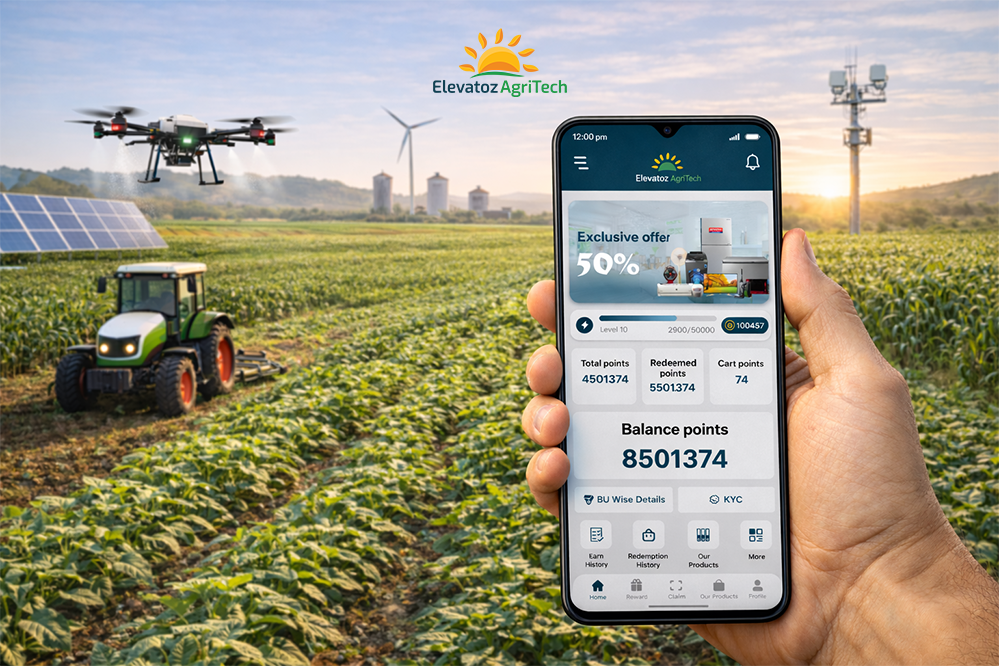
- Farmer Engagement & Advisory: Elevatoz recognizes that technology is only as good as its adoption. Through our Farmer Engagement module, we use gamified mobile experiences to educate and reward farmers for sustainable practices. Every time a farmer scans a product QR code, it becomes a learning moment – they receive region-specific usage tips, dosage guidance, and even tutorials on best practices. Over time, this drives more precise application of inputs (no over-fertilizing or misusing chemicals) because farmers are empowered with knowledge at the moment of use. It’s like having a personal agronomist in your pocket, guiding you toward precision farming methods.
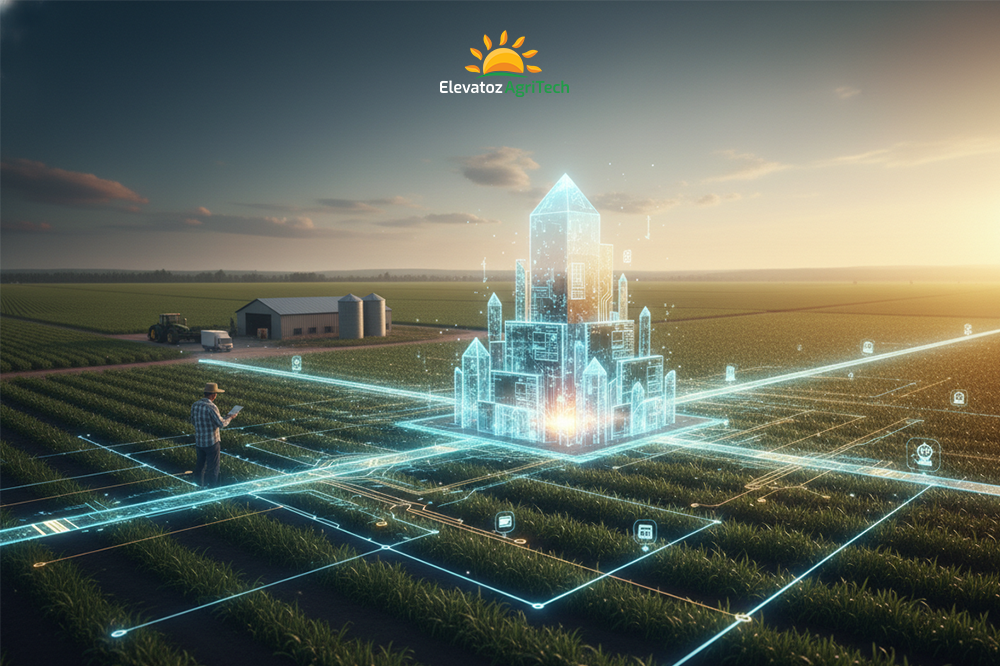
- Integrated Ecosystem for Decisions: By connecting traceability, field data, and user engagement, Elevatoz is engineering a holistic precision ag ecosystem. The data flowing through our system – from a factory QR code scan to a farmer’s field scan – all converges into meaningful insights. We don’t just present dashboards; we provide actionable triggers. For instance, if an unusual spike in product verification scans occurs in a region, it could indicate a emerging pest attack (farmers flocking to buy pesticide). Our platform could alert nearby farmers about the risk proactively, or inform the company to investigate and respond. This is precision agriculture at a macro level – using data to drive swift, targeted actions across an entire network.
In summary, Elevatoz is innovating by broadening the very definition of precision agriculture. It’s not only about robots in the field; it’s about precision of information and trust. By digitizing the agricultural supply chain and marrying it with on-field tech, we ensure that every decision – from what seed to plant to how to engage farmers – is backed by data. This comprehensive approach builds a resilient, transparent system where farmers, agribusinesses, and consumers all benefit.
Looking Ahead: Smarter, Sustainable, and Inclusive
The future of precision agriculture is incredibly bright. We’ll see farms that practically run themselves, guided by continuous data streams and AI insights. We’ll also see a more democratized precision ag, where even a one-acre farmer can use a smartphone to achieve yields that rival a big industrial farm. Technology, when designed with inclusivity and simplicity in mind, can bridge the gap between small and large producers.
Elevatoz Agritech stands at the forefront of this movement. Our mission is to ensure that technology serves the field, and not the other way around – meaning tools must adapt to real farm needs and challenges. By focusing on trust (through anti-counterfeit and traceability measures) and intelligent data use (through AI analytics and engagement platforms), we are engineering a future where agriculture is more predictable, profitable, and sustainable for all stakeholders.
In the coming years, precision agriculture will likely converge with sustainable farming imperatives (climate-smart practices) and with supply chain transparency demands. Elevatoz is already aligning with these trends, proving that innovation in agriculture isn’t just about fancy gadgets – it’s about creating systems that connect every dot from seed to store. The result: farming that produces more with less, protects the environment, and uplifts those who feed us.
The journey has just begun. As we push into this exciting future, one thing is clear: the farms of tomorrow will run on data and trust as much as on sun and soil. And with innovators like Elevatoz Agritech, the future of precision agriculture is in capable hands – blending cutting-edge technology with on-ground wisdom to elevate agriculture for everyone.
Sources:
· Grand View Research, Precision Agriculture Market Analysis – highlighting a $9.4B market value in 2022 and 12.6% CAGR.
· AgTech Digest (2023), Future of Precision Agriculture – notes on deeper integration of AI/IoT and autonomous equipment as key future trends.
· Elevatoz AgriTech Blog (2025), Global Agritech 2026: Asia’s Lessons – example of Vietnam’s adaptable precision tech for small farms using drones, IoT irrigation, and sensors.