Counterfeiting in seeds and fertilizers is no longer a hidden supply-chain issue. It has become one of the most serious threats to modern agriculture silently eroding farmer trust, damaging soil health, and undermining the credibility of global agribusiness brands.
From India and Southeast Asia to Africa and Latin America, counterfeit agri products have evolved into a sophisticated parallel economy. Fake seeds that look authentic. Fertilizers repackaged in original bags. Duplicate batch numbers circulating across markets.
As agriculture becomes more global, this problem is no longer local.
It is systemic and it demands a digital response.
Global markets are now offering valuable lessons on how technology, traceability, and farmer empowerment can collectively fight counterfeiting at scale.
1. The Real Cost of Counterfeit Agri Products
Counterfeiting impacts agriculture at every level of the ecosystem.
For farmers
-
Poor germination and uneven crop growth
-
Reduced yields and income loss
-
Long-term soil degradation
-
Loss of confidence in branded inputs
For manufacturers
-
Brand dilution and reputation damage
-
Revenue leakage
-
Increased regulatory scrutiny
-
Breakdown of distributor trust
For governments and exports
-
Food safety risks
-
Non-compliance with global traceability standards
-
Reduced export competitiveness
In several developing markets, industry estimates suggest 10–30% of agri inputs in circulation may be counterfeit a figure that grows in regions with fragmented distribution and weak last-mile visibility.
2. Why Traditional Anti-Counterfeit Measures No Longer Work
For years, companies relied on physical safeguards:
-
Holograms
-
Printed batch numbers
-
Tamper seals
-
Distributor declarations
These measures were effective once.
Today’s counterfeit networks can:
-
Replicate physical security elements
-
Reuse genuine packaging
-
Forge invoices and batch codes
-
Operate across states and borders
The core weakness is clear:
Physical verification without digital validation cannot scale.
Without real-time visibility and authentication, counterfeiting simply shifts location — it doesn’t disappear.
3. Seed Authentication: Global Markets Are Going Digital First
Seeds are the most sensitive input in agriculture. A single counterfeit seed can ruin an entire season.
That’s why global markets are prioritizing seed authentication systems that combine physical packaging with digital identity.
What leading markets are implementing:
✔ Unique Product Identity (UPI)
Each seed pack carries a unique, non-repeatable digital code linked to:
-
Manufacturer and plant
-
Batch and lot number
-
Crop variety and genetics
-
Approved distribution route
✔ Farmer-Level Verification
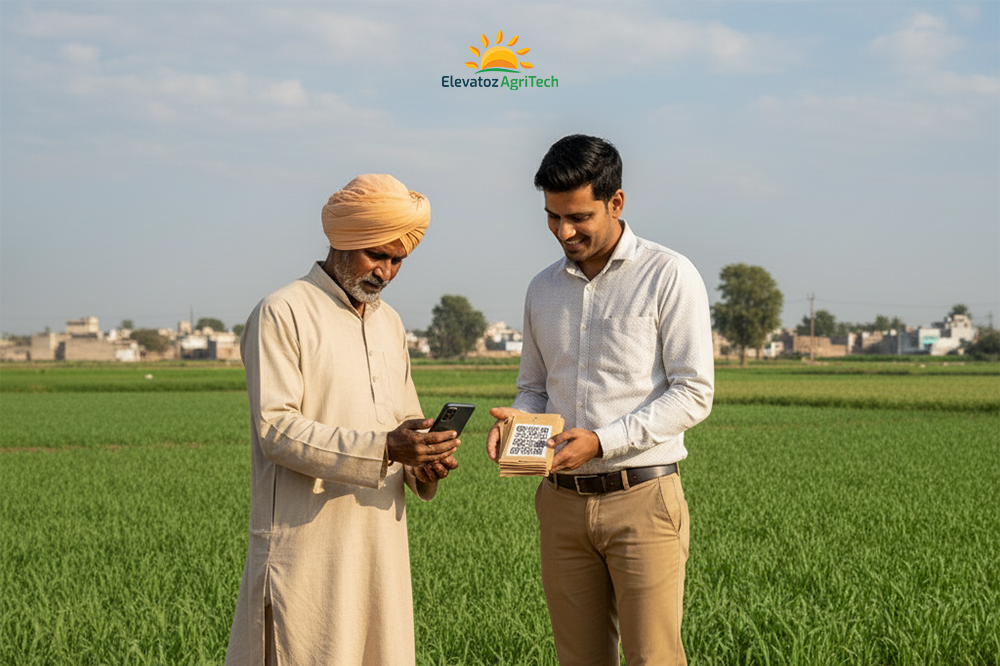
Farmers verify authenticity by:
-
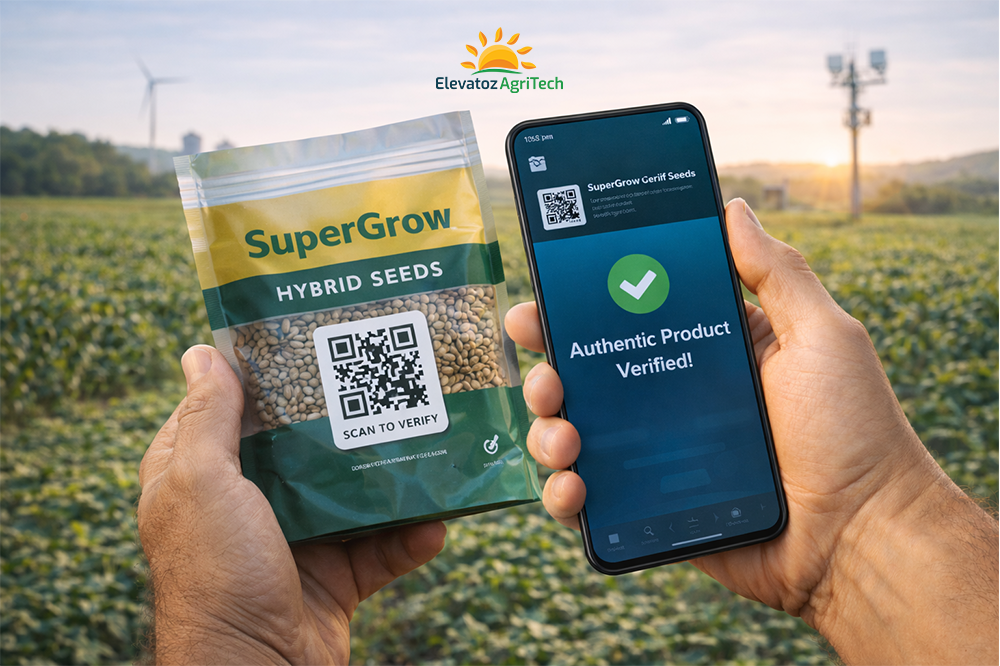
Scanning a QR code
-
Using WhatsApp or mobile apps
-
Accessing SMS or USSD in low-connectivity regions
Instant confirmation includes:
-
Genuineness validation
-
Crop and usage information
-
Expiry details
-
Advisory support
This shifts authentication from enforcement teams to the farmer — the strongest and fastest checkpoint in the system.
4. QR Code Traceability: The Global Standard Against Counterfeits
Across Asia, Europe, and export-driven agri markets, QR code traceability has emerged as the most effective anti-counterfeit tool.
Why QR-based systems work
-
Low cost and easy to deploy
-
Works on basic smartphones
-
Scales across millions of packs
-
Enables real-time data capture
-
Integrates with ERP, CRM, and SaaS platforms
What advanced QR traceability enables
-
Factory-to-farm tracking
-
Detection of duplicate scans
-
Geo-location anomaly alerts
-
Identification of counterfeit hotspots
-
Distributor and retailer accountability
Countries like Thailand and Vietnam are already linking QR traceability to export eligibility, making it a competitive necessity rather than a value-add.
5. Lessons from Global Markets: What Actually Reduces Counterfeiting
After observing multiple regions, five consistent lessons stand out:
1️⃣ Digital authentication beats physical inspection
If authenticity can’t be verified digitally, counterfeiting will persist.
2️⃣ Farmers must be part of the solution
Markets that empower farmers to verify products see faster and more sustainable impact.
3️⃣ Last-mile visibility matters most
Most counterfeit leakage happens at distributor and retailer levels — not factories.
4️⃣ Data reveals risks faster than enforcement
Scan patterns and location data identify counterfeit zones long before inspections do.
5️⃣ Integrated platforms outperform standalone tools
The strongest systems link traceability with loyalty, sales data, and channel engagement.
6. Fertilizer Counterfeiting: Solving a More Complex Challenge
Fertilizers present unique risks:
-
Bulk movement
-
Repacking and refilling
-
Multiple intermediaries
Global markets are addressing this by:
-
QR tagging at bag or batch level
-
Distributor-to-retailer mapping
-
Scan-based delivery confirmation
-
Retailer authentication incentives
-
Digital proof-of-sale tracking
When traceability is combined with channel incentives, retailers become active participants in counterfeit prevention not weak links.
7. The Future: AI-Driven Traceability & Predictive Risk Detection
The next phase of counterfeit prevention is predictive, not reactive.
Emerging systems are now using:
-
AI to detect abnormal scan behavior
-
Predictive models to flag high-risk zones
-
Real-time dashboards for compliance teams
-
Blockchain-backed traceability for exports
-
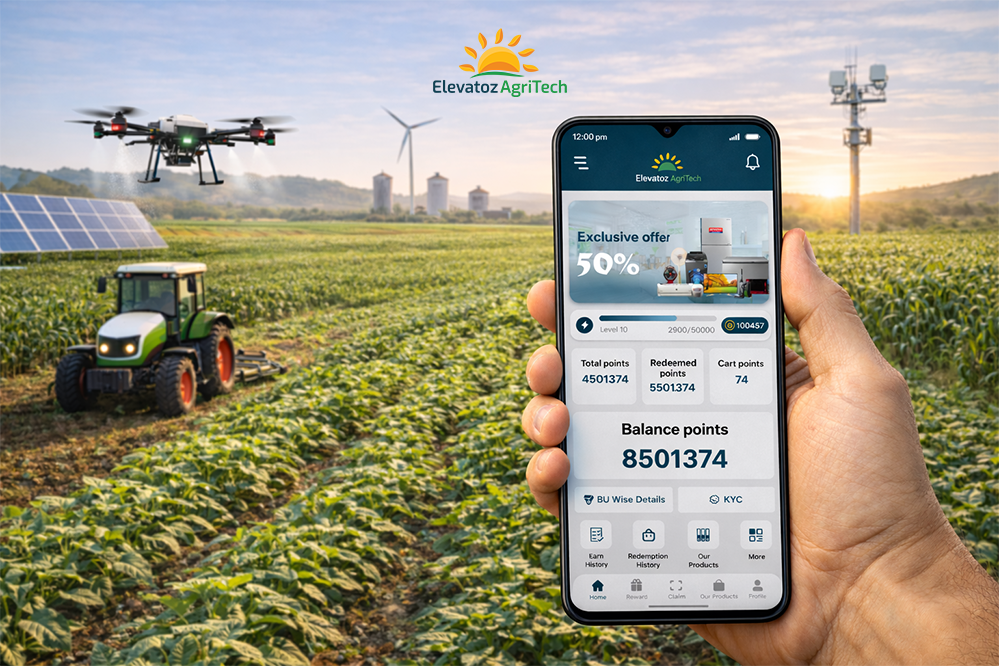
Loyalty-linked authentication to drive adoption
Counterfeit prevention is evolving into a data intelligence function, embedded directly into agribusiness operations.
Conclusion: Authenticity Is the Foundation of Agricultural Trust
Counterfeiting in seeds and fertilizers is not just a commercial problem — it’s a trust crisis.
Global markets are proving that the solution lies in:
-
Seed authentication systems
-
QR code traceability
-
Farmer empowerment
-
End-to-end digital visibility
As agriculture becomes more connected and data-driven, authenticity will define competitiveness.
Because in agriculture, the most valuable crop is trust and trust grows only when authenticity is guaranteed.